
Introduction
Some people on a boat heading to Gaza say they faced harsh conditions when Israel stopped them at sea. Once held, then sent away, a few began describing what happened behind bars. Attention from around the world followed fast, questions rising about how blockades work, rules on water travel, plus how those caught are handled. (reuters.com)
A handful of nations saw their citizens caught when Israel stopped boats heading toward its shore. Groups focused on relief and rights had gathered the trip, hoping to bring supplies while spotlighting Gaza’s conditions.
Flotilla Intercepted What Followed
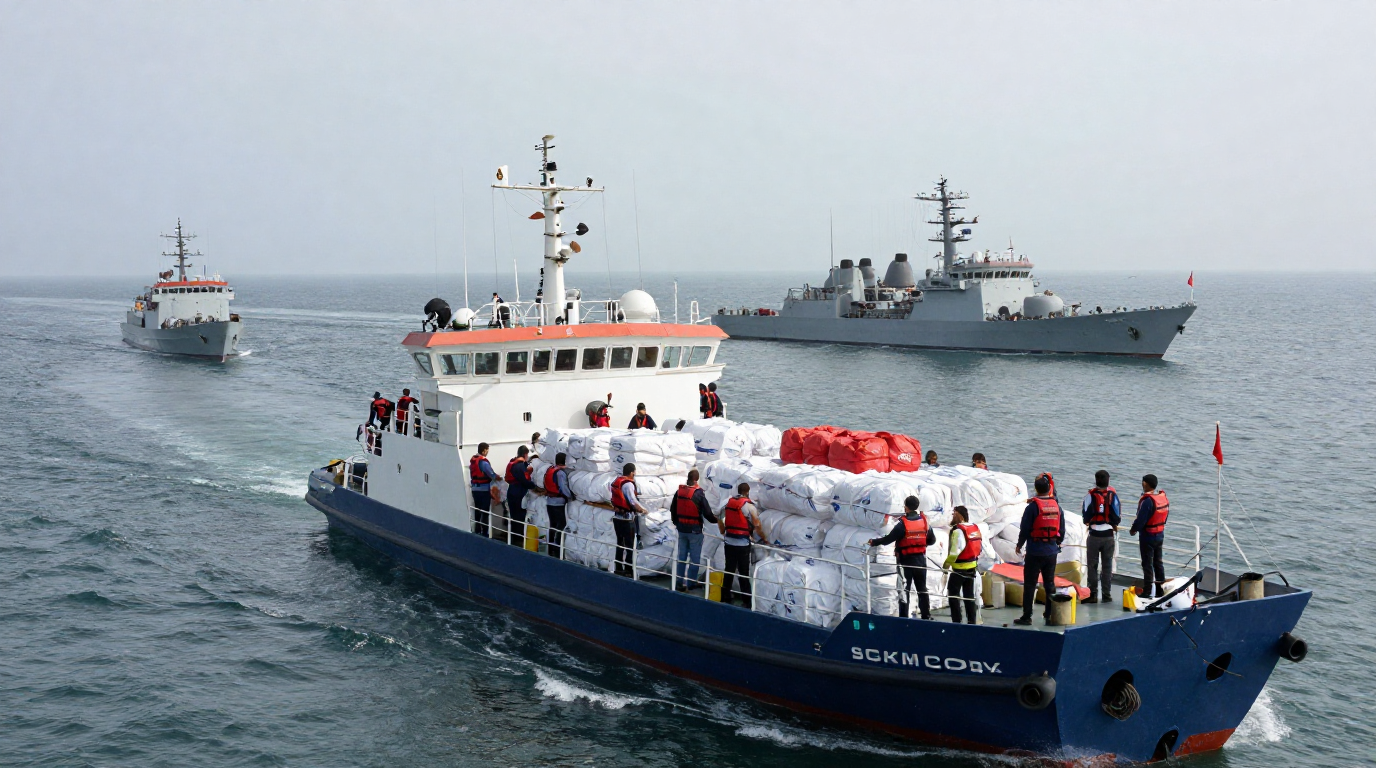
Out near open sea, ships got halted by Israel’s navy long before touching Gaza shores. Security rules tied to the coastal blockade were cited by officials as the reason behind the move.
Pulled away by authorities, activists ended up held in Israeli detention centers. Following procedures, a number of those involved got sent back to where they came from.
Out in the streets, people began gathering after news broke. Anger sparked when word spread about who got caught. In different towns, crowds showed up demanding answers. Some shouted questions about how those on board were handled. Others focused on why they were held at all. Voices rose, pushing officials to respond.
Activists Raise Allegations
Later came stories of rough treatment behind bars, once the detainees walked free. Some said lawyers were hard to reach while locked up. Talking to embassy contacts felt nearly impossible for a few. How they were moved around often left marks, literally. Their accounts painted a picture of tight control from start to finish.
One person mentioned getting asked a lot of questions – about being part of the flotilla, plus ties to the teams behind it. Another said the interview went deep into who they knew within the planning circles. Someone else recalled hours spent explaining their role, along with links to activists involved. A few noted repeated queries on both participation and relationships with coordinators. Several brought up how every detail of their connection was examined closely during questioning.
So far, Israeli officials haven’t verified those statements. Earlier cases like this were handled by saying people held go through regular security steps.
Israel’s Stance Regarding the Flotilla
Security, they say, drives Israel’s sea restrictions near Gaza. Officials insist the goal sits firmly on stopping arms and unapproved goods from moving into the area.
Flotilla efforts get blocked because Israel says they break sea rules meant to keep things secure. Stopping them is how those limits stay real on the water.
Back then, Israel stopped several boat groups like this one, sparking arguments between countries plus backlash worldwide.
International Reaction
Out there, voices rose after the hold-up of those on the boats. Officials spoke up, then aid networks followed. Groups among the people added their thoughts too.
Questions arose in certain nations about how captured individuals are handled. Procedures for detaining people drew attention across different governments. One concern focused on what happens after someone is taken into custody. Details around holding and processing detainees became a point of discussion. Several states wanted more information on these operations.
Out in the open, groups defending human lives demand probes free from government touch, questioning how protesters are treated. What lies beneath arrests puzzles many, so scrutiny over laws used to lock people up grows louder by the day.
Meanwhile, worries over safety tied to sea travel in war-affected areas have surfaced among certain national leaders.
Gaza Blockade Context
A boat clash ties back to Gaza’s years-long isolation, where exits and entries stay tightly controlled. Movement slows under rules that limit what comes in or goes out.
Security concerns drive Israel’s stance on the blockade, yet observers point to its heavy toll on everyday life in Gaza. Though officials emphasize protection, residents face mounting hardship under restricted access. From Jerusalem’s view, controls prevent threats; from the ground, they deepen struggle. One side sees defense, the other sees deprivation. Restrictions remain firm, suffering continues. What looks like safety from one angle shows pain from another.
Ever since it started, the blockade sits at the heart of talks between Gaza, Israel, and nearby countries. Though often debated, its presence shapes nearly every diplomatic exchange. Because tensions remain high, few agreements move forward without addressing it first. While some push for easing restrictions, others stress security concerns just as strongly. Since no side agrees fully, progress comes in small, uneven steps. For now, the situation holds steady, stuck between demands and doubts.
A small fleet of boats began appearing at sea, launched by people aiming to test limits while drawing attention to urgent human needs. Movement through water became a way to question blockades others had put in place.
Legal and Maritime Questions
Floating far from any nation’s shore, a ship stopped mid-journey brings up old rules that few still agree on. When one crew detains another beyond coastal borders, arguments emerge about who holds authority out there. Laws written long ago stir debate once again as modern patrols cross paths at sea.
Floating across oceans, vessels follow a set of global guidelines that outline when warships can step in. These rules protect movement at sea while setting clear moments for intervention by military fleets.
Besides regional tensions, safety concerns shape how Israel applies its rules. Though critics question methods, officials insist current threats demand firm responses. When violence spikes nearby, patrols increase without delay. Because past attacks influence policy, restrictions often stay tight. Even during calm stretches, border checks rarely ease much. Since neighbors remain hostile in places, military readiness stays high always.
Still unclear where naval rules stand when wars shut off sea routes. Some lawyers see one way, others argue differently. Boundaries blur under blockade conditions at sea. Interpretations split even among seasoned legal minds.
Treatment of Detainees
What former detainees described centers on how they were held, along with steps taken once picked up at sea. Some details emerged about living conditions during custody. Procedures following capture came into clearer view through their accounts. How authorities handled people right after interception became part of the picture. Their stories brought attention to treatment while confined. Moments after being intercepted shaped much of what followed. Conditions inside holding areas appeared consistently in testimonies. What happened immediately after seizure mattered just as much.
Later on, a few people mentioned waiting long to speak with someone while held. Not knowing their standing under the law added to the unease throughout that time.
Some said the removal process finished following a few hours, sometimes stretching into days. Others found it wrapped up quicker, though still marked by long waits at checkpoints.
Officials in Israel say each detainee moves through procedures shaped by law and safety needs.
Activist Groups Influence
A group of boats got moving because activists from different countries wanted aid to reach Gaza. Their main goal had always been keeping supply lines open through sea routes. Organizers believed maritime pressure could shift policy decisions slowly over time. Humanitarian reasons guided every step they planned together across borders.
Working together, these teams run sea operations that bring help while shining a light on the blockade. Their efforts pull global eyes toward the restricted area through strategic delivery routes.
Some people who show up are helpers, others speak up for fairness, while some come from groups working on social issues.
Peaceful aims marked the journey, say those behind the newest flotilla. Humanitarian goals guided their path instead of confrontation. Not force, but aid shaped their purpose. Their effort moved across water with supplies, not slogans. Calm intent drove every boat forward. Relief, not resistance, filled their cargo holds. Voices from the fleet describe a voyage built on care. Each vessel carried hope more than messages. Still waters reflected their quiet approach. This mission sailed under banners of support.
How the Event Affected Nearby Areas
Bickering flared after someone caught a message, stirring up hard feelings during talks on Gaza. Tensions climbed because of what was said behind closed doors.
Outrage popped up across multiple nations once word spread about the arrest. News of the capture sparked unrest far beyond borders. When reports emerged of someone being held, streets began filling. From city to city, people took notice after hearing about the hold. Reaction flared widely as details leaked out on social platforms.
Now tensions ripple through talks linking Israel, the Palestinian areas, one more round of back-and-forth. Behind closed doors, envoys trade words while pressure builds from outside. This event slips into conversations already stretched thin. Not every voice agrees on next steps. Some wait. Others push forward anyway.
Still, local leaders push talks aimed at easing aid struggles alongside shaky safety issues across the area.
Media Attention and Public Discussion
Out of nowhere, coverage spiked across global news outlets after the flotilla event. This shift sparked conversation among everyday people once again.
What gets reported often lines up with what officials say about safety – yet voices from protest groups keep pushing different claims into view.
Out here, talks on social platforms keep growing louder about what happened – people see it different ways. Not everyone lines up the same take.
Nowhere is the tension more clear than in how aid groups reach affected areas. A single incident often sparks wider debate on media coverage during crises.
Previous Flotilla Incidents
Fleet operations like these? Israel’s military has blocked them before.
Last time something like this happened, talks between countries got tense while global teams stepped in to look closer. A few years back, reactions unfolded much the same – officials argued, questions spread across borders.
Still, these moments keep feeding talk on sea limits along with aid routes into Gaza. Though quiet at times, the conversation never really stops.
One event after another piled up, making ties among Israel, groups tied to Gaza, and global watchers harder to untangle. Complexity grew not from single moments but how they linked, one feeding into the next without clear break. Observers found themselves caught in layers built slowly, shaped by actions met with reactions across shifting ground.
Humanitarian Context
The flotilla was organized in response to ongoing humanitarian concerns in Gaza.
For now, getting hold of items or medicine still faces limits. Travel by individuals continues to be blocked in today’s setup. Restrictions stay in place without clear shifts on the horizon.
Still, aid groups sound alarms over shelter quality alongside medical care availability. People face hurdles reaching basics like clean water because supply routes stay blocked week after week. Safety worries grow where power grids fail repeatedly during storms. Children miss school when roads turn too dangerous near border zones.
Out at sea, the group of boats moved together to draw attention to what was happening. By sailing in formation, they made their point clear without saying a word aloud.
Conclusion
Now comes fresh claims from those pushing boats toward Gaza, piling onto a conflict already tangled in sea limits and port closures. A new twist arrives just when tensions seemed stuck in place.
Even though officials say it’s about safety, aid workers keep questioning how people are treated while held. What happens behind closed doors still draws scrutiny from those watching closely.
Out here, eyes from around the globe are fixed on what happened. This won’t fade fast – talks about aid delivery at sea will keep circling back. Rules governing water routes may shift because of it. Security concerns across nearby regions now tie into the story somehow. Whatever comes next, people will link it to this moment.